Getting to the Airport on Time in Australia Starts Before You Zip Your Bag
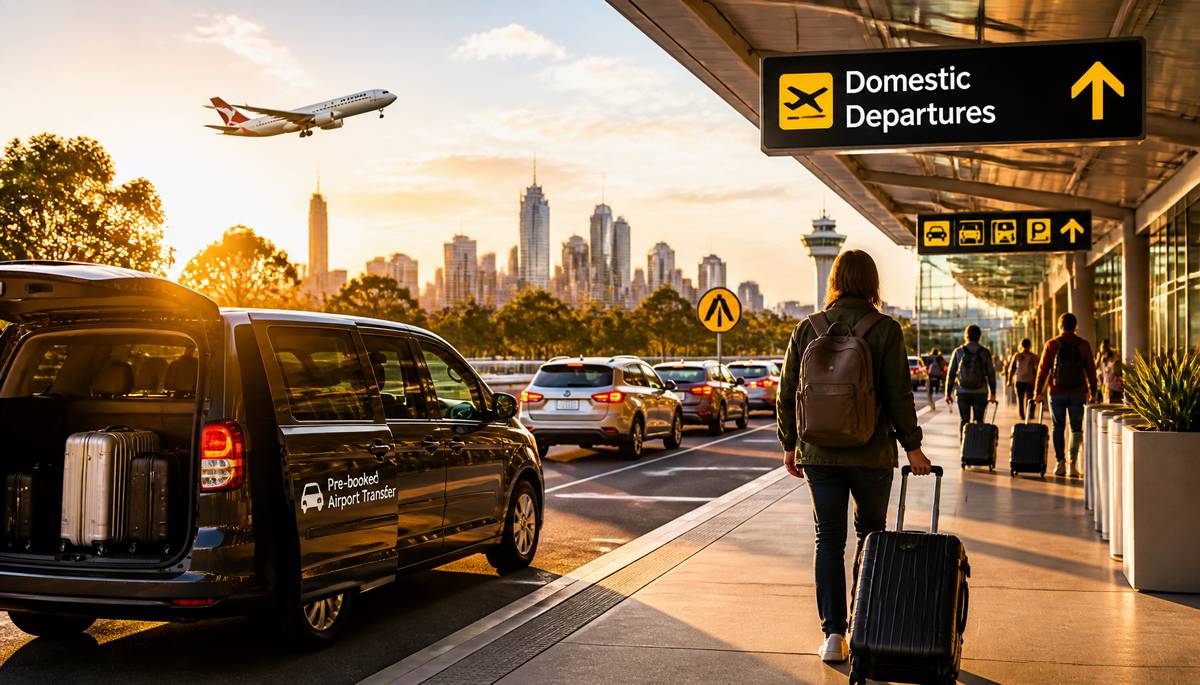 Flights in Australia have a peculiar habit of departing at times that feel personally inconvenient. Whether it’s a 5:40am FIFO run out of Perth or a mid-morning hop from Sydney that somehow still requires leaving home in the dark, getting to the airport is rarely as simple as “just leave early.” The real work begins long before you check in, and it has very little to do with whether you remembered your toothbrush.
Travel planning tends to focus on packing lists, itineraries, and boarding passes. Yet one of the most unpredictable parts of any trip is the short stretch between your front door and the terminal. That journey is where even well-organised plans can unravel, usually at the exact moment you feel most confident.
Australia Runs on Distance and Timing
Australian cities don’t do “quick trips” particularly well. Distances are long, suburbs stretch endlessly, and airports often sit just far enough away to turn a minor delay into a major problem. In Perth, for instance, a calm 25-minute drive can quietly double if traffic decides to wake up early. In Sydney or Melbourne, the phrase “just down the road” has caused more missed flights than lost passports ever have.
Then there’s the timing. Early domestic flights are especially popular with FIFO workers, business travellers, and anyone trying to maximise their day. That means the roads are busy long before sunrise. It’s a strange experience—driving through darkness while surrounded by a convoy of equally determined people all hoping they’re the one who left early enough.
There’s also a psychological trap at play. Early flights create a false sense of security because “traffic shouldn’t be that bad at this hour.” Unfortunately, thousands of other people have had the same thought.
Traffic Doesn’t Care About Your Boarding Time
Australian traffic has its own rhythm, and it rarely aligns with flight schedules. Roadworks appear overnight, accidents happen at the worst possible intersections, and peak hour seems to start earlier every year. Even in cities known for being relatively easy to navigate, one small disruption can ripple outward and add unexpected delays.
Allowing extra time isn’t just a cautious suggestion—it’s essential. A good rule is to build in a buffer that feels slightly excessive. If everything goes smoothly, you’ll arrive early and have time for a coffee. If it doesn’t, you’ll arrive exactly when you need to, possibly with a newfound appreciation for that buffer you almost didn’t include.
Planning around peak periods is equally important. School drop-offs, tradie traffic, and morning commutes all overlap in ways that can turn a straightforward drive into a slow-moving queue of brake lights. And no one enjoys watching the minutes tick by while calculating how fast they could jog to the terminal with a suitcase.
Pre-Booking Beats Last-Minute Scrambling
One of the simplest ways to remove uncertainty is to lock in your transport ahead of time. Waiting until the morning of your flight to figure out how you’re getting there introduces unnecessary risk. Availability can fluctuate, especially during busy periods or in areas with limited options.
Pre-booking allows you to focus on timing rather than logistics. It also means you’re not standing outside at 4:30am refreshing an app and wondering if walking is a viable alternative. In many cases, it provides clearer expectations around pickup times and travel duration, which makes planning the rest of your morning far easier.
There’s also a comfort factor. Knowing your ride is sorted removes one more variable from an already time-sensitive situation. It turns the journey into something predictable, which is exactly what you want when everything else about travel can feel uncertain.
More importantly, pre-booking helps you commit to a departure time. Without that structure, it’s easy to shave off “just five more minutes” at home—minutes that tend to matter far more once you’re stuck behind a line of cars all heading to the same place.
Planning for the Unexpected Without Overthinking It
There’s a fine balance between being prepared and turning your airport run into a military operation. The goal isn’t to account for every possible scenario, but to acknowledge that something small will likely go wrong. Maybe it’s a slow-moving vehicle in front of you, a last-minute fuel stop, or the sudden realisation that your chosen route is everyone else’s backup plan too.
Building flexibility into your schedule makes these moments manageable rather than stressful. Leaving earlier than feels necessary creates breathing room. It also reduces the temptation to take questionable shortcuts that look promising on a map but turn into a scenic tour of every traffic light in the suburb.
Longer distances require even more consideration. In Australia, it’s not uncommon for airport trips to stretch well beyond the typical urban commute. Regional travellers heading into major cities face an added layer of complexity, where a single delay early in the journey can compound over time. Planning rest stops, checking conditions, and allowing for variation in travel time isn’t overkill—it’s practical.
Group Travel Adds Its Own Twist
Travelling with others introduces a new set of variables, most of them human. Coordinating departure times, ensuring everyone is ready, and managing multiple pickup points can quietly eat into your buffer. Someone will inevitably say they’ll be “two minutes,” and those two minutes will develop ambitions.
In some cases, splitting into separate vehicles or organising staggered departures can actually improve efficiency. It reduces the pressure on a single timeline and allows for more flexibility if one group runs into delays. It might not feel as cohesive, but it often works better in practice—especially when airport deadlines don’t negotiate.
Luggage is another factor. What begins as a simple trip can quickly turn into a puzzle of suitcases, carry-ons, and oddly shaped items that refuse to fit neatly. Planning vehicle space in advance avoids the classic pre-departure shuffle, where bags are rearranged multiple times while someone insists it “definitely fit last time.”
When Smooth Arrivals Feel Like a Small Victory
There’s a quiet satisfaction in arriving at the airport with time to spare. No rushing, no frantic glances at departure boards, no speed-walking that turns into an accidental sprint. Just a steady, controlled start to the journey.
Getting there on time rarely comes down to luck. It’s the result of small decisions made earlier—choosing when to leave, how to get there, and how much margin to allow. These choices don’t feel dramatic in the moment, but they shape the entire experience.
Packing will always matter, but it’s rarely the thing that determines whether you make your flight. The journey to the airport, on the other hand, has a direct say in how the day unfolds. Give it the attention it deserves, and the rest of the trip tends to follow along without complaint—even if your socks don’t match.
|
|
